

World AIDS Day 2025: Research remains key
01.12.2025 08:00 CET
World AIDS Day 2025: Research remains key
Lucerne, December 1, 2025 – World AIDS Day was launched in 1988.1 Held every year on December 1 since then, it serves as a reminder that the human immunodeficiency virus, or HIV for short, continues to pose a challenge to public health.4 At the same time, it honors the tremendous progress made possible by research and medical innovation in recent decades. MSD has been involved in HIV research for more than 35 years and will continue to drive scientific progress to further improve the quality of life for people living with HIV.
At the end of 2024, around 40.8 million people were living with HIV2 around the world.2 In Switzerland, a total of 318 new HIV diagnoses were reported in 2024, which corresponds to an incidence of 3.5 cases per 100,000 inhabitants.3 These figures show that prevention, education and reliable access to diagnostic testing remain key. There is also a need for social action: HIV remains stigmatized, which leads to some people getting tested and treated too late or not receiving treatment at all. At the same time, it is known today: those who receive effective treatment, do not pass on the virus. This knowledge helps reduce prejudice and promote acceptance of people with HIV.
Three decades of medical progress: From crisis to manageable life
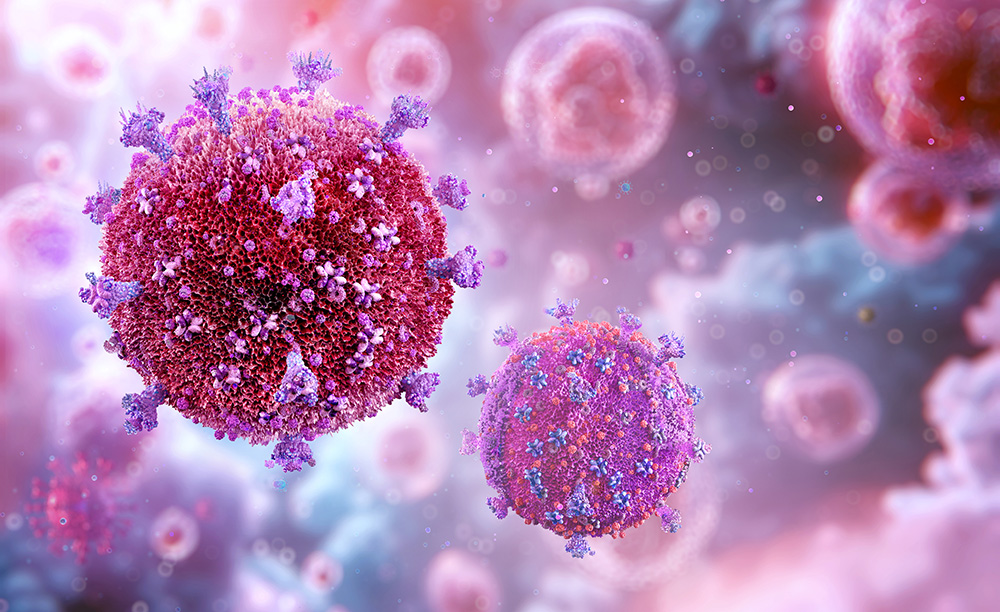
In the early 1980s, an HIV diagnosis for many people meant losing their future prospects. In 1982, the term “AIDS” (acquired immunodeficiency syndrome) was first used to describe the clinical syndrome caused by the human immunodeficiency virus (HIV) (Fig.).4 The medical world was faced with a new, previously unknown challenge.
MSD launched one of the first HIV research programs
MSD accepted this challenge early on and launched one of the first HIV research programs to combat the virus in the mid-1980s.4 Since then, HIV science has been marked by important milestones: In 1992, MSD joined other companies to create the Inter-Company Collaboration for AIDS Drug Development to accelerate the development of HIV therapies.4
In the mid-1990s, MSD contributed to the development of what are known as protease inhibitors, which made combination therapies possible for the first time, thus transforming HIV from a fatal infection to one that could be treated in the long term.4 Protease inhibitors prevent the protease (a key enzyme for the maturation of new HI viruses) from activating certain proteins in newly formed viruses. This results in immature, defective HI viruses that do not infect new cells.5
Thanks to ongoing research in the 2000s and 2010s, HIV therapies became simpler, more tolerable and better tailored to patients’ needs. Today, research is moving into the next stage: HIV medication that needs to be taken less often could further improve the quality of life of those affected and open up new avenues for prevention. This development shows how continuous scientific work and global cooperation have contributed to transforming HIV from an acute crisis to a manageable chronic disease.
Research remains key for HIV
Despite major advances in clinical research, HIV remains a chronic infectious disease that requires continuous medical support. MSD continues to invest in HIV research to develop therapies that are effective, well tolerated and better adapted to everyday life. At the same time, the company’s commitment to education remains key.
«MSD has been working to improve the lives of people living with HIV for over 35 years. In Switzerland, we are continuing this mission, together with hospitals, research teams and community organizations. We want to give those affected more options and contribute to ending the HIV epidemic», says Dr. med. Diana Arnet, Sr. Director Medical Affairs at MSD Switzerland.

MSD continues to push the boundaries of HIV research. Long-term, the goal remains the complete eradication of the virus. World AIDS Day serves as a reminder that education, unity and scientific progress need to go hand in hand to end the epidemic in the long term. MSD believes: Only by combining innovation with responsibility can a future without HIV be successful achieved.
Links for further information
- MSD Switzerland (MSD Merck Sharp & Dohme AG), HIV, https://www.msd.ch/en/search/HIV/?s=HIV
- Federal Office of Public Health (FOPH), AIDS, https://www.bag.admin.ch/en/aids-en
- World Health Organization (WHO), HIV and AIDS, https://www.who.int/news-room/fact-sheets/detail/hiv-aids
MSD in Switzerland
In Switzerland, MSD employs over 1,000 people at five sites in the cantons of Lucerne and Zurich. At the site in Zurich, in “The Circle”, MSD operates a global innovation and development hub. The main therapeutic areas of MSD are oncology, infectious diseases, and cardiometabolic diseases. We also have a broad portfolio of vaccines for the prevention of diseases in children, adolescents, and adults. At our site in Schachen, we manufacture medicines for global clinical trials and operate a forensic laboratory. In addition, MSD conducts almost 50 clinical trials annually in Switzerland alone. We take our responsibility to the local community seriously and have been involved for years in, among other things, the «Trendtage Gesundheit Luzern» and the «Alliance Health competence». In 2025, MSD received the «Top Employer Switzerland» award for the thirteenth time in a row.
For more information, please visit www.msd.ch, de.msd-animal-health.ch, www.msd-gesundheit.ch and follow us on LinkedIn, Facebook und YouTube.
Media Contact
Acronyms
AIDS = Acquired Immunodeficiency Syndrome; FOPH = Federal Office of Public Health; HIV = Human Immunodeficiency Virus; MSD = Merck Sharp & Dohme; WHO = World Health Organization.
References
- World AIDS Day. https://worldaidsday.org/, last viewed: November 4, 2025.
- World Health Organization (WHO), Global Health Observatory. HIV data and statistics. https://www.who.int/teams/global-hiv-hepatitis-and-stis-programmes/hiv/strategic-information/hiv-data-and-statistics, last viewed: November 4, 2025.
- Federal Office of Public Health (FOPH). Sexuell übertragene Infektionen und Hepatitis B/C in der Schweiz und Liechtenstein im Jahr 2024: Eine epidemiologische Beurteilung. [Sexually transmitted infections and hepatitis B/C in Switzerland and Liechtenstein in 2024: An epidemiological assessment] FOPH Bulletin 44 of October 27, 2025.
- MSD Switzerland, HIV commitment website and company history. https://www.msd.ch/en/stories/hiv/, last updated: February 11, 2025.
- MSD Manual, Patient Edition. Antiretroviral Treatment of Human Immunodeficiency Virus (HIV) Infection. Last updated: April 2025. Available at https://www.msdmanuals.com/home/infections/human-immunodeficiency-virus-hiv-infection/antiretroviral-treatment-of-human-immunodeficiency-virus-hiv-infection. Last viewed: November 5, 2025.
MSD Merck Sharp & Dohme AG, Werftestrasse 4, 6005 Lucerne. Switzerland.
Copyright © 2025 Merck & Co., Inc., Rahway, NJ, USA and its affiliates. All rights reserved.
CH-NON-03165, 11/2025