News releases
Press Release by MSD Switzerland (MSD Merck Sharp & Dohme AG) and gfs.bern

Lucerne/Bern, 11 May 2026 – For the fifth consecutive year, the research institute gfs.bern has conducted a representative survey on the quality of cancer care in Switzerland on behalf of MSD Switzerland (MSD Merck Sharp & Dohme AG). The results point to a very clear stance among the public: Two-thirds of the survey participants wish to see greater investment in prevention. A clear majority also supports fair access to cancer prevention – regardless of income and place of residence. In terms of prevention, the federal government should be held more accountable than it has been in the past. For example, a national coordination effort to combat cancer enjoys broad support and should increase efficiency and quality.

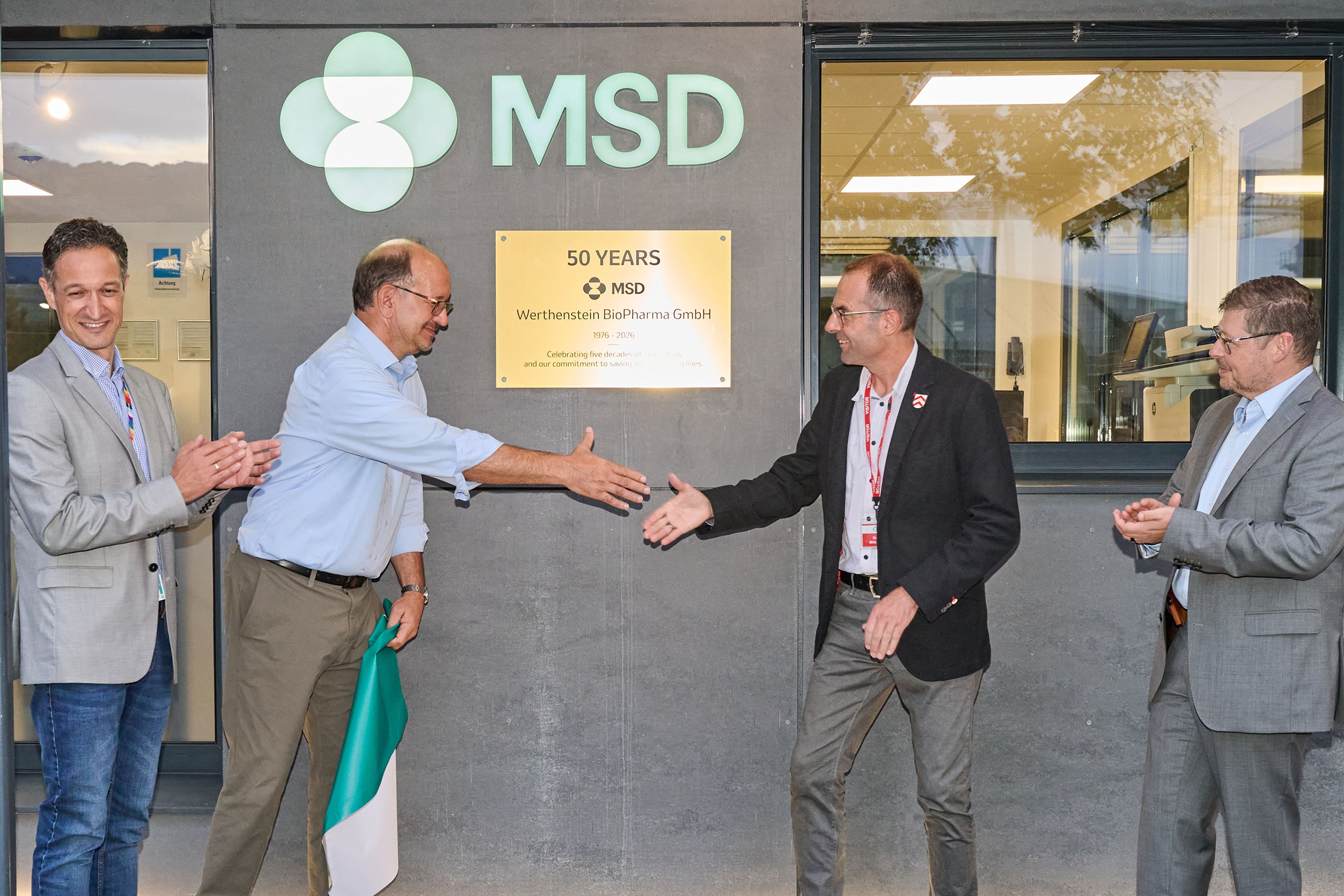
«Early detection and prevention again remain very important to the majority of respondents in the anniversary edition of the Cancer Care Survey. Despite this high level of endorsement, some measures – such as HPV vaccination or preventive lung cancer screening – are still less well known and utilized.» says Lukas Golder, Co-Director of the research institute gfs.bern (photo). «When comparing Pap smears or mammograms to the PSA test for prostate cancer, women take cancer screening significantly more seriously than men.»
Switzerland invests little in prevention – a clear majority calls for more
One of the key findings of the 5th wave of the MSD Cancer Care Survey is the clear commitment of respondents to increased investment in prevention. In Switzerland, approximately 0.48% of gross domestic product (GDP) was invested in prevention in 2022. Compared to its neighboring countries, Switzerland invests relatively little as a percentage of GDP (Germany: 0.99%, Austria: 0.83%, Italy: 0.54%). When asked whether Switzerland should invest more, the same amount, or less money on prevention in the future, the respondents’ views are equally clear: Two-thirds wish to invest more, 24% want to invest the same amount, and only 3% wish to invest less.
Early screening measures: important, but insufficiently utilized
In a representative survey conducted from February 2 to 19, 2026, the research institute gfs.bern interviewed 1,264 people (older than 18 years) throughout Switzerland by telephone or online on behalf of MSD Switzerland. When it comes to early detection measures (e.g., cancer screening) and starting treatment as soon as possible after a cancer diagnosis, around nine out of ten respondents also rate these as “very important” or “generally important” in this anniversary year.
While early detection measures specific to women enjoy broad support, this is significantly less for those specific to men: For example, 91% consider cervical smears («Pap test» for the early detection of possible changes in the cervix) to be «very important» or «generally important» and 88% rate mammography (an X-ray of the breast for the early detection of breast cancer) similarly. The situation is somewhat different for men: 76% consider self-examination for testicular cancer to be «very or generally important», while only 65% consider the so-called «PSA-Test» (a blood test for the prostate-specific antigen) to be important for the early detection of prostate cancer. Colon cancer screening, early lung cancer detection, and HPV (human papillomavirus) vaccination received approval rates ranging from 69% to 83% among both male and female respondents.
Although all early detection measures are considered «important», only some have actually been taken advantage of at least once: A cervical smear was performed at least once by 78% and mammography by 58% of the respondents. Fewer than half have ever had a skin check for skin cancer prevention (47%), colon cancer screening nonetheless 45%, or a PSA test 41%. Only few were vaccinated against HPV (18%) or participated in a lung cancer screening program (8%). The discrepancy between the perceived importance of early screening measures and their actual implementation thus also persists in the fifth wave of the Cancer Care Survey.
National strategies and coordination are called for
It is interesting to note that – even though early screening measures are not used regularly – respondents still want funding for cancer screening to be allocated as part of the national cancer plan: Between 77% and 92% want the early screening measures mentioned above to be funded. Fairness was also mentioned as a top priority in this year’s survey: 98% of respondents want access to cancer prevention and treatment regardless of income.
97% of the survey participants want equal access to cancer care – regardless of income or place of residence. 88% call for national coordination in the battle against cancer. It is also interesting to note that 94% of respondents are of the opinion that long-term savings can be achieved through investments in cancer prevention and early detection. Overall, 84% believe that national coordination in the battle against cancer leads to more efficiency and quality. In this context, 73% of respondents believe that the federal government should take the lead in the battle against cancer. However, when asked whether the federal government, the cantons, or both should share equal responsibility for cancer screening (prevention and early detection), 54% believe both should share equal responsibility, 35% believe the federal government should be responsible, and only 7% believe the cantons should be responsible.
«When one considers that, due to Switzerland’s federal system, individual cantons currently have authority over their own healthcare systems, these results point to a trend in the opposite direction.» Quote Lukas Golder, gfs.bern
Five-year analysis of the Cancer Care Survey
SSince the first survey in 2021, the Monitor has shown a stable picture: The public consistently rates core medical care – hospital treatment, therapy, and medical care – positively, with ratings even rising slightly recently. Difficulties in care caused by the pandemic have returned to their normal state. Among those directly affected, satisfaction with hospital care and access to treatment exceeds 90 percent.
At the same time, the five-year comparison reveals persistent shortcomings: Aftercare at home, psychological support, and support for family caregivers have been rated lower than other aspects of care since 2021 and have in part deteriorated further recently. Regarding follow-up care, a clear majority would like access to counseling for family members, the right to psychological follow-up care, and government support for re-entering professional life.
The gap between attitudes and behavior regarding prevention remains just as consistent: A large majority considers cancer screening to be very important, yet actual utilization of many screening programs – such as lung cancer screening, HPV vaccination, or colorectal screening – remains low. By international standards, Switzerland also invests relatively little in prevention as a percentage of GDP. The public calls for more investment in prevention.
A new finding in the 2026 survey is that there is now a greater desire for national coordination: The federal government should share responsibility jointly with the cantons. People should not be denied access to early detection and prevention measures based on their income or place of residence. The public wishes this to be regulated at the national level – fairly and equally for everyone.
* MSD Cancer Care Barometer 2026: Klare Haltung der Bevölkerung: Prävention ist ein Muss. Nationale Lösungen und klare Strategien erhalten grosse Unterstützung. / The public’s clear stance: Prevention is a must. National solutions and clear strategies enjoy broad support. gfs.bern. May 2026. Download (in German) at: Cancer Care Survey 2026 | Cockpit gfs.bern AG. Full report also available upon request from Contacts (see below).
gfs.bern Research Institute
The research institute that bears overall responsibility for the survey, gfs.bern ag, can draw on a long tradition of empirical social research. Founded in 1959 as the Gesellschaft zur Förderung der empirischen Sozialforschung der Schweiz (GfS), it started operating as a separate business unit of GfS-Forschungsinstitut AG from 1986 with the aim of conducting social empirical research with a focus on politics and communication research. The unit became its own company in 2004 as gfs.bern ag. gfs.bern sees itself as a methodical, full-service provider with clear areas of specialism. The company’s market presence aims to achieve quality leadership in applied social research (in concrete terms: survey research with face-to-face, phone, online, and written interviews) and has been able to maintain this advantage in analysis to political opinion-forming processes for around 20 years. As such, gfs.bern has played a pivotal role in shaping empirical social research in terms of social policy and democratic decision-making processes in Switzerland. gfs.bern also has many years of experience in monitoring politics and policy processes. Holding teaching positions at the universities of Zürich, Berne and Fribourg, as well as at various higher education institutes, means we can contribute our findings to the world of education and to reflect upon our own work in an academic setting.
For more information, please visit www.gfsbern.ch.
About MSD in Switzerland
MSD, a leading biopharmaceutical company, employs over 1,000 people in Switzerland at three sites. The company’s headquarters are in Lucerne. At the site in Zurich, in “The Circle”, MSD operates a global innovation and development hub. In addition, we manufacture medicines for global clinical trials and operate a forensic laboratory in Schachen (Canton Lucerne). MSD conducts around 40 clinical trials annually in Switzerland alone. The main therapeutic areas of MSD are oncology, infectious diseases, cardiovascular and cardiometabolic diseases. We also have a broad portfolio of vaccines for the prevention of diseases in children, adolescents, and adults and we are one of the leading companies in veterinary medicine in Switzerland. Furthermore, we take our responsibility to the local community seriously and have been involved for many years in initiatives such as the «Trendtage Gesundheit Luzern» and the «Alliance Health Competence».
For more information, please visit www.msd.ch, de.msd-animal-health.ch, www.msd-gesundheit.ch, www.mymsd.ch and follow us on LinkedIn, Facebook und YouTube
Media Contact gfs.bern
Media Contact MSD Switzerland
Copyright © 2026 Merck & Co., Inc., Rahway, NJ, USA and its affiliates. All rights reserved.
CH-NON-03321, 04/2026
Filter year:
Show more
Items per page
1-10 of 100